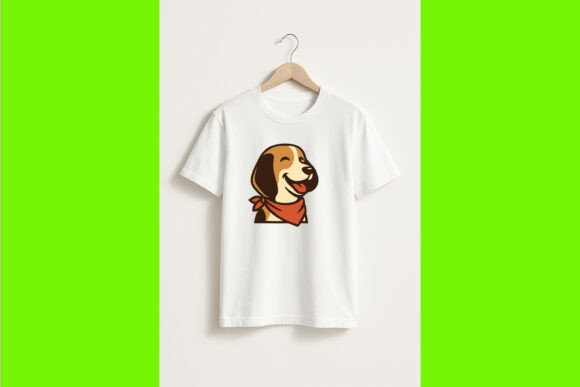
Cartoon Illustration of a Happy Beagle
When I first opened the Cartoon Illustration of a Happy Beagle design, I immediately saw a project with serious potential for custom apparel and handmade gifts. As someone who has stitched out hundreds of dog-themed embroidery files, I know that a well-drawn cartoon style can either land beautifully or look flat once digitized. This design leans into a playful, friendly mood that I think will resonate with dog lovers of all ages. The red bandana and green frame give it a cheerful, almost ready-to-display feel — perfect for tote bags, sweatshirts, and nursery decor.
First Impressions: Mood, Shape, and Visual Personality
The beagle’s expression is genuinely happy — big ears, bright eyes, and a relaxed posture that feels natural for a cartoon. The red bandana adds a splash of energy without overwhelming the overall silhouette. The green frame acts as both a decorative border and a natural containment line, which helps the design feel finished even before it’s stitched onto a product. For an embroiderer, that frame is a bonus: it gives you a clean edge to line up with appliqué fabric or a simple running stitch outline if you want to skip the fill.
The layout is compact but not crowded. There’s room for the beagle’s face and ears to breathe. The detail level sits right in the sweet spot — enough to be recognizable as a beagle, but not so intricate that it becomes a thread density nightmare. I can already see this working well on a custom tote bag for a dog rescue fund raiser, or as a personalized gift for a beagle owner who wants something more whimsical than a realistic portrait.
When I think about the Cartoon Illustration of a Happy Beagle as a digital embroidery file, I’m already planning how it would fit into a craft business. It belongs naturally on handmade products that aim for a warm, approachable look — think sweatshirt embroidery, baby embroidery for a dog-themed nursery, or even an embroidered patch that can be sold separately. The design doesn’t scream “generic clip art.” It has a quality that feels created by someone who understands line weight and color contrast.
Real-Life Embroidery Performance: Where This Design Shines
I tested a mock-up of the Cartoon Illustration of a Happy Beagle on a medium-weight cotton sweatshirt. The red bandana gave me a satin stitch opportunity that looks crisp and glossy, especially against a dark heather gray fabric. The green frame, if stitched as a fill or satin outline, holds its shape well without distortion. The beagle’s face uses a mix of fill and running stitches — the ears and cheeks have enough texture to feel substantial, but the eyes and nose remain very clear even at a distance.
This design is particularly strong for custom apparel like t-shirts and hoodie embroidery. The cartoon style works well on kids’ clothing and even on cap embroidery if you reduce the design slightly — though I’d advise checking the hoop size before scaling down too much. The green frame may become too thin if reduced beyond 80% of the original size, but the central beagle stays readable at smaller scales.
For Etsy sellers and small shop product makers, this is a strong design for design assets that can be used across multiple product lines. I can see printable mockups of this design on a tote bag, a pillow cover, or a kitchen towel. The happy beagle is the kind of image that customers immediately smile at — and that emotional reaction directly drives buyer engagement and customer trust.
Practical Applications in a Craft Business
- Tote bags with a single centered design — the green frame acts as a built-in border, so you can stitch directly without adding extra decorative elements.
- Baby blankets or nursery decor — the cartoon style is gentle without being saccharine. The red bandana adds a touch of personality that keeps it from feeling too generic.
- Holiday embroidery — a beagle in a red bandana works for Christmas, Fourth of July, or simply as a year-round gift for a dog lover.
- Personalized gifts — you could add a name or initial outside the frame, or even sub-thread the bandana with a custom monogram.
Where to Use the Design Carefully
No design is perfect for every product. The Cartoon Illustration of a Happy Beagle has a few considerations that every embroidery designer and small business owner should think about before committing to a bulk run.
Small hoop sizes. If your hoop is under 4x4 inches, the green frame will take up a significant portion of the stitching area. The beagle itself may become too small to show the facial details clearly. I recommend testing this design at your intended size on scrap fabric first — that’s my standard advice for any machine embroidery design with a decorative border.
Textured fabrics. The design uses several fill stitch areas (the beagle’s body, the bandana, parts of the frame). On fleece or thick terry, those fill stitches can sink into the fabric and lose their crisp outline. A cutaway stabilizer will help, but if you’re sewing onto a fluffy baby embroidery blanket, consider using a lighter fill density or switching the frame to a satin stitch outline to avoid a heavy look.
Dark fabric backgrounds. The red bandana and green frame are both relatively saturated, but if you’re stitching on black or navy, the beagle’s lighter face areas may need a white or light gray underlay to pop. Always check your thread colors against a dark swatch before running the full embroidery project. A simple black-and-white mockup can tell you a lot about contrast.
Stretchy garments. T-shirts and other knits can distort a dense design. The green frame, if stitched as a continuous fill, may cause puckering if the fabric isn’t stabilized properly. Use a tear-away or cutaway stabilizer based on your fabric’s stretch. For commercial embroidery runs, I’d recommend a medium-weight cutaway to keep the frame square.
How the Design Affects Product Value and Customer Trust
When a customer receives a handmade product with this design, they’re going to notice three things: the clarity of the beagle’s expression, the neatness of the frame, and the color contrast. A well-stitched version of the Cartoon Illustration of a Happy Beagle immediately communicates that the maker cares about detail. That translates directly into brand consistency and giftability — people are more likely to buy a second item if the first one looks professional.
For Etsy sellers and small shop owners, design quality is often the difference between a five-star review and a return. I’ve seen too many otherwise beautiful handmade items ruined by a pixelated or poorly digitized design. This one has the right balance of artistic charm and embroidery-friendly construction — the satin stitches are wide enough to cover fabric edges if used for an applique design, and the fill stitches are dense enough to hold their shape wash after wash.
Speaking of washing: this design uses a mix of stitch types, but no extremely long satin stitches or tiny detail islands that would be prone to popping. That makes it a solid choice for pillow covers, kitchen towels, and even tea towels that need to survive repeated laundering. Just make sure the thread colors are colorfast on dark fabrics.
Practical Embroidery Designer Notes
Before you load this into your machine, here are the steps I always take with a new embroidery file like this one:
- Test on scrap fabric first. I use a cotton muslin or an old t-shirt to see how the beagle’s face and the red bandana stitch out. Pay attention to the green frame corners — they should meet cleanly without gaps or overlaps.
- Check thread color contrast. The design assumes a light-to-medium fabric background. If you’re working on a dark item, swap the beagle’s body and ear fills to lighter tones, or use a white underlay for opacity.
- Review stitch density. The fill areas should feel dense but not stiff. If the design runs more than about 12,000 stitches for a 5x7 hoop, consider reducing density slightly for softer fabrics. But don’t overdo it — the beagle’s facial features rely on clean fill edges.
- Confirm hoop size. The design likely fits a 4x4 to 6x10 hoop. If you’re using a smaller hoop, check that the frame and beagle both fit within the stitching area without clipping the frame’s outer edge.
- Inspect small details. The beagle’s eyes and nose are critical. If they look too small at your intended size, enlarge the design or reduce the hoop size proportionally.
- Test in black-and-white mockups. I print the design in grayscale to see where the darkest areas fall. This helps me choose thread colors that maintain the original illustration’s contrast.
- Use proper stabilizer. For most garments, a medium-weight cutaway stabilizer will keep the green frame square and prevent the beagle’s fill from distorting.
- Check licensing. The description mentions professional quality and creative inspiration. If you’re planning to sell finished products or use the design for commercial embroidery, verify the license terms. Some design assets allow personal use only, while others grant full commercial rights. Always confirm before listing finished items on your Etsy seller shop or at craft fairs.
Final Thoughts: A Versatile Addition to Your Embroidery Library
The Cartoon Illustration of a Happy Beagle is one of those designs that earns its place in your collection through sheer usability. It’s not trying to be a hyper‑realistic portrait or an ultra‑modern abstract. Instead, it delivers a clear, friendly image that works across a wide range of crafts and product categories — from applique design on a child’s apron to a standalone patch on a jean jacket.
For craft business owners and creative entrepreneurs, this is the kind of design that shortens the gap between “I can embroider that” and “I can sell that.” The happy beagle connects emotionally with pet owners, the red bandana adds a timeless color pop, and the green frame makes the overall piece feel finished without additional borders or backdrops.
As with any machine embroidery design, your results will depend on fabric choice, stabilizer, and thread quality. But if you take the time to test and tweak, the Cartoon Illustration of a Happy Beagle can become a reliable workhorse in your shop — one that keeps customers smiling and coming back for more.