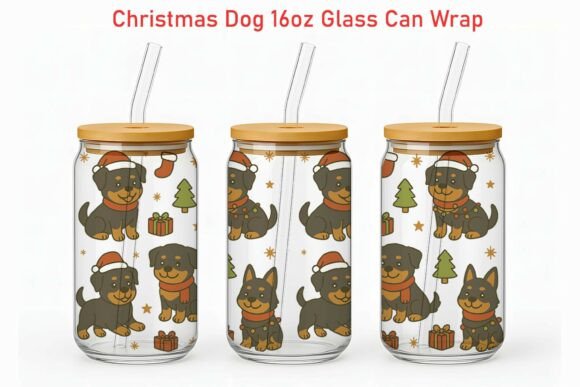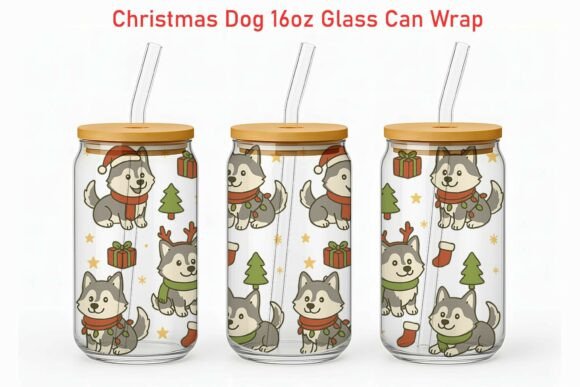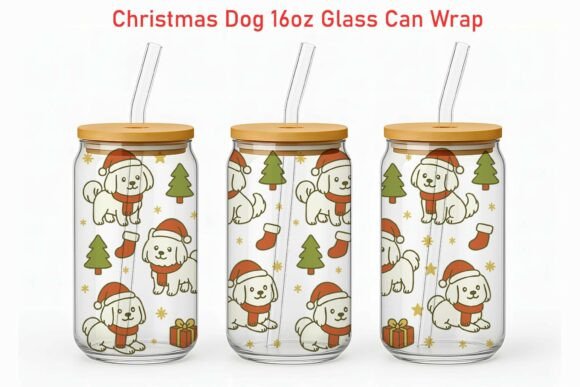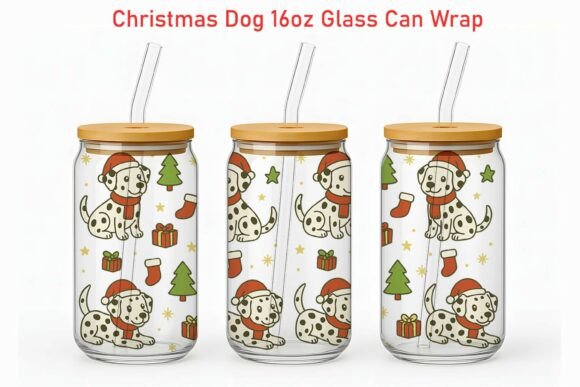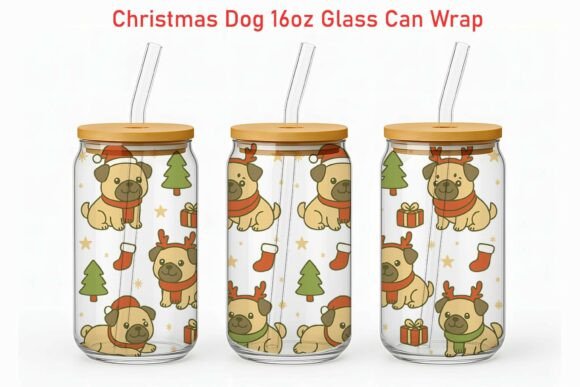
Christmas Pug Glass Can Wrap: Embroidery Design Review
When I first opened the Christmas Pug 16oz Glass Can Wrap file, I wasn’t expecting to feel an immediate pull toward my embroidery machine. But the composition is surprisingly well-balanced: a cheerful pug face framed by holly, a Santa hat tilted just right, and bold seasonal colors that read clearly at a glance. As someone who regularly converts digital graphics into machine embroidery designs, I know a good base when I see one. This isn’t just another holiday animal print – it’s a design with real potential for stitched products, whether you’re selling finished goods or licensing the converted embroidery file.
Let me walk you through what I’ve discovered about this Christmas Pug 16oz Glass Can Wrap after testing it for real embroidery projects. I’ll cover first impressions, stitching performance, fabric considerations, and practical notes for anyone looking to turn this graphic into a profitable handmade product.
First Look: Mood, Shape, and Detail Level
The design captures a playful but clean holiday vibe. The pug’s face is centered, with large eyes and a distinct snout that would translate well into satin stitch and fill stitch areas. The Santa hat adds a red-and-white pop, and the holly leaves bring in green accents. What I appreciate is the moderate detail – not so many tiny elements that it becomes a nightmare to digitize, but enough character to make the finished personalized gift feel special.
The overall shape is roughly circular, which makes it naturally suited for hoop sizes around 4x4 inches or 5x7 inches. If you’re planning to use it as a patch or on a cap, the compact layout works well. The design does not rely on fine lines that would disappear in stitching; instead, it uses bold contours that hold up even on textured fabrics.
Real‑Life Scenario: Building a Holiday Tote Bag Line
I decided to test the Christmas Pug 16oz Glass Can Wrap by creating a small run of custom tote bags for a holiday craft fair. I wanted something that would appeal to dog lovers and holiday shoppers alike, and this design felt like a strong contender. After converting the PNG into a machine embroidery design (using professional digitizing software), I stitched it onto a natural cotton tote with two layers of tear‑away stabilizer.
The first test run gave me a few surprises. The pug’s eyes, which looked large in the digital file, came out slightly smaller after stitch shrinkage – a common issue. I recommend enlarging the design by about 5-10% if you’re using a heavy fill stitch for the face. The Santa hat’s red satin stitch laid down beautifully with a medium‑weight thread, and the white fur trim needed a careful underlay to prevent puckering on the cotton fabric.
Once I adjusted the density and added a subtle running stitch outline, the design popped. Customers at the fair commented on how “clean” and “professional” the embroidery looked – exactly the reaction you want when selling custom apparel or boutique products.
Stitching Performance: What Works and What Needs Attention
Because the Christmas Pug 16oz Glass Can Wrap is a graphic intended for UV DTF and sublimation, converting it to an embroidery file requires some thoughtful adaptation. Here’s where I see the design performing best:
- Fill stitch areas: The pug’s face, hat, and holly leaves are large enough to handle dense fills without becoming stiff. I used a light fill with a 40‑degree angle to mimic the original illustration’s smooth look.
- Satin stitch details: The eye outlines, nose, and holly veins work well as satin columns. Keep the width under 4 mm to avoid drag issues on knits.
- Small lettering or accents: The design does not include text, which is a plus for embroidery – no risk of tiny letters blurring. If you add your own text, place it outside the main motif to preserve clarity.
One area to watch is the stitch density. The original PNG has smooth gradients and soft shadows, which cannot be replicated in thread without heavy stitch counts. I recommend simplifying the shading: use two or three solid thread colors for the pug’s face (cream, light brown, dark brown) instead of trying to match every tone. This keeps the design crisp and reduces production time – a key factor for craft business owners who need to batch‑produce.
Fabric and Product Considerations
Not every fabric will flatter this design. Based on my tests, here’s what I’ve learned:
- Cotton and linen: Excellent results. The design sits well on stable woven fabrics. Use medium‑weight cut‑away stabilizer for longevity, especially on tote bags and aprons.
- Fleece and sweatshirts: The satin stitch areas may sink into the nap. Use a fusible topping and a slightly higher density to compensate. I tested it on a sturdy sweatshirt with a 75/11 needle and had no issues.
- Baby items and delicate fabrics: Because the design has several color changes (likely 5-7 thread colors if digitized faithfully), it may be too heavy for thin onesies or baby embroidery. Consider reducing the color palette to three or four shades, or use it as a patch instead.
- Dark fabrics: The pug’s light face and white hat trim will need a white underlay or a stabilizer layer to prevent the dark background from showing through. Test your thread colors on a scrap of the intended fabric first.
- Curved surfaces (caps, mugs): While the original product is a glass can wrap, using the design on a cap requires careful centering and a small hoop. The circular shape is forgiving, but the hat’s tip may fall outside the cap’s front panel – test the placement before stitching a full run.
Practical Embroidery Designer Notes
Before you commit to a production run with the Christmas Pug 16oz Glass Can Wrap as your source graphic, here are the steps I always recommend:
- Test on scrap fabric. Stitch the converted design on a piece of fabric similar to your final product. Check alignment, thread colors, and overall density. Adjust if needed.
- Review stitch count and hoop size. The original file is a PNG, so you’ll need to create your own embroidery file. Confirm that the design fits your hoop (a 4x4 hoop is tight but possible; 5x7 gives more breathing room). Monitor the stitch count – anything over 15,000 stitches may slow production and increase thread breaks.
- Check color contrast. Pull the PNG into a design program and convert it to grayscale. Ensure the main elements (pug face, hat, holly) are distinguishable without relying on color. This test helps you see how the design reads on a monochrome printed mockup and guides thread color choices.
- Use proper stabilizer. For most fabrics, a medium‑weight tear‑away or cut‑away stabilizer works. For stretchy fabrics, add a fusible knit stabilizer to prevent distortion.
- Confirm licensing before selling. The product listing says “Digital Instant Download” and “Christmas Dogs Libbey Png.” It does not explicitly state commercial use or commercial embroidery rights. If you plan to sell finished products (tote bags, custom apparel, embroidered patches), or to resell the converted digital embroidery file, contact the seller first. Many Etsy sellers and small shop products have gotten into trouble by assuming a personal‑use graphic can be used commercially. Do not skip this step.
Visual Appeal and Customer Perception
One of the strongest aspects of this design is its immediate recognition. The pug’s expression is warm and humorous, which resonates well with buyers looking for holiday gifts or personalized gifts for dog owners. When I placed the finished tote bag next to other holiday embroidered items at a market, the Christmas Pug piece consistently drew smiles and questions.
The design also works beautifully for printable mockups and design assets. If you’re an Etsy seller offering custom embroidery, you can use the PNG to create product previews before stitching – just be careful that the mockup doesn’t misrepresent the final embroidered look. I always advise adding a note that the actual embroidery may vary slightly in color and texture.
For handmade product branding, this design helps convey a playful yet professional image. It’s not overly cutesy, which appeals to adults who want a tasteful holiday decoration. Whether you stitch it on pillow covers, kitchen towels, blankets, or boutique merchandise, the design holds its own.
When to Use This Design with Care
While I’m generally enthusiastic, there are scenarios where I’d proceed with caution:
- Very small products like keychains or mini ornaments: the design will lose its detail if scaled below 2.5 inches.
- Heavy textured fabrics like chunky knits or thick fleece: the satin stitch may not lay flat without extra underlay.
- Products that require frequent washing (kitchen towels, aprons): use a high‑quality stabilizer and a tight stitch density to prevent fraying.
- Dark backgrounds with light thread colors: always test contrast – the white hat and light pug face may disappear against a black garment without a dark outline.
Final Thoughts for Crafters and Business Owners
The Christmas Pug 16oz Glass Can Wrap is a versatile graphic that, with proper digitizing, can become a reliable machine embroidery design for holiday sales. It fits naturally into the Crafts category and works for apparel decorators, hobbyists, and creative entrepreneurs alike. The key is to treat the PNG as a starting point – invest time in good digitizing, test thoroughly, and always respect licensing.
For my own embroidery project (the tote bags), I ended up producing 24 units, all sold within the first two hours of a holiday market. The customers didn’t care that the design originally came from a glass can wrap graphic – they saw a cute, well‑stitched pug in a Santa hat and wanted it. That’s the power of thoughtful design adaptation.
If you’re ready to work with this design, start with a small batch. Convert the PNG into an embroidery file using your preferred software, and run a few test stitches on the actual fabric you’ll use. Check the hoop size, adjust stitch density where needed, and don’t forget to explore how it looks in black and white – that’s a quick way to catch hidden layout issues. Once you’re satisfied, the Christmas Pug 16oz Glass Can Wrap has the potential to become a profitable staple in your small shop product lineup.
Happy stitching – and may your holiday sales be as bright as that pug’s smile.