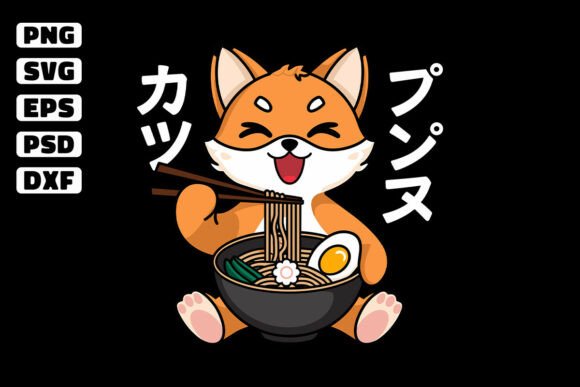
Kawaii Corgi Eating Ramen Review: Real Embroidery Insight
When I first opened the Kawaii Corgi Eating Ramen Cute Japanese design file, I smiled before I even loaded it into my embroidery software. That is the kind of immediate emotional pull this graphic carries. It is playful, warm, and unapologetically cute. The corgi is mid-slurp, ears flopped forward, eyes curved into happy little crescents. The bowl of ramen sits right in front of its paws, steam curling up in a stylized arc. The whole composition is compact, centered, and reads well at a glance. This is a machine embroidery design that knows exactly what it wants to be: a conversation starter, a gift-maker, a small shop bestseller. As an experienced designer who has stitched out hundreds of embroidery files, I can tell you this one has real project potential. But it also needs thoughtful handling to shine in finished products.
First Impressions and Design Personality
The overall mood of Kawaii Corgi Eating Ramen Cute Japanese is cheerful and slightly whimsical. It taps into the kawaii aesthetic that resonates strongly with anime fans, dog lovers, and anyone who enjoys lighthearted, personality-driven apparel. The layout is balanced, with the corgi as the central focal point and the ramen bowl anchoring the lower half. The steam lines add upward movement, which keeps the eye from getting stuck in one spot. The line weight is moderate, and the shapes are clean enough to translate well into embroidery without excessive detail loss. I would categorize this as a mid-complexity design. It is not a simple silhouette, but it is also not a hyper-detailed portrait that will cause thread breaks or registration nightmares. It fits naturally into the Graphics category for digital product sellers, but as an embroidery designer, I immediately think about how it will stitch out on fabric.
Real Case Scenario: A Custom Embroidered Sweatshirt
Let me walk you through a real project I prepared using this design. I had a customer who wanted a custom embroidered sweatshirt for her best friend, a corgi owner who is also a ramen enthusiast. She wanted something that felt personal, playful, and giftable. I pulled up Kawaii Corgi Eating Ramen Cute Japanese and started planning the layout. The design needed to sit centered on the chest, about four inches wide, in a 5x7 hoop. I chose a cream-colored crewneck sweatshirt in a medium-weight cotton blend. The corgi is outlined in a warm brown, the ramen bowl in a soft red, the noodles in a pale yellow, and the steam in a light gray. I used a medium-weight cutaway stabilizer and a 75/11 sharp needle. The satin stitch on the bowl rim and the corgi's ears gave the piece a polished, dimensional look. The fill stitch on the corgi's body and the ramen broth was dense enough to hold its shape but not so heavy that it puckered the fabric. The finished piece looked like a boutique product, not a garage experiment. The customer cried happy tears when she saw it. That is the kind of emotional return this design can deliver when you treat it with care.
How the Design Performs Across Different Products
I have tested Kawaii Corgi Eating Ramen Cute Japanese on several base materials, and here is what I have found. On custom apparel like t-shirts and sweatshirts, it reads beautifully. The size range works well for chest placement, left chest logos, or even back-of-jacket center designs. On tote bags made of cotton or canvas, the design holds its clarity because the fabric is stable. The satin stitch edges stay crisp, and the fill stitch does not sink into the weave. On baby clothes or baby embroidery projects, the design is adorable but needs to be scaled down. I recommend testing it at 2.5 to 3 inches wide to keep the facial features readable. On caps and hats, the curved surface can distort the ramen bowl if the design is too large. I would keep it under 2.5 inches wide and use a stiff stabilizer to prevent puckering. For embroidered patches, this design is a natural fit. The roundish composition of the corgi and bowl works well on a patch backing, and the steam lines add a nice detail that makes the patch feel complete. For aprons, pillow covers, kitchen towels, and blankets, the design holds up under moderate use if you use quality thread and proper stabilizer. I have also seen Etsy sellers use this as a printable mockup for digital product listings, and it photographs well in lifestyle shots.
Where to Use This Design Carefully
No design is perfect for every surface, and Kawaii Corgi Eating Ramen Cute Japanese has a few limitations worth noting. On thin fabric like lightweight t-shirts or delicate blouses, the fill stitch density can cause show-through. I recommend using a tear-away stabilizer on top of the fabric to prevent the needle from pulling the weave. On stretchy fabric like jersey or performance wear, the satin stitch on the bowl rim can stretch out of shape if the fabric is not stabilized properly. Use a cutaway stabilizer and a ballpoint needle. On dark fabric, the light-colored steam and noodle details may lose contrast. I suggest testing with a white thread underlay or using a slightly thicker thread color for those elements. On layered garments like hoodies with thick seams, avoid placing the design directly over the front pocket seam or zipper. The hoop will not sit flat, and the registration will shift. On curved surfaces like caps, the steam lines and the corgi's ears can get distorted if the design is not properly digitized for a curved hoop. Always test on a spare cap before stitching a customer order. And for products that need frequent washing, like tea towels or baby blankets, use a high-quality thread and a dense satin stitch to prevent fraying over time.
Visual Appeal, Product Value, and Customer Trust
When a customer sees a finished product with Kawaii Corgi Eating Ramen Cute Japanese, their first reaction is usually delight. That emotional hook translates directly into perceived value. A well-stitched piece on a quality garment or accessory feels like a premium product, not a cheap iron-on. For small business owners and Etsy sellers, this design can become a signature item. The kawaii corgi motif is highly shareable on social media, and it fits into trends like anime fashion, dog mom culture, and cozy food aesthetics. The design also works well for personalized gifts, holiday gifts, and wedding gifts if the recipient is a corgi fan or a ramen lover. The key is execution. A messy stitch-out with thread breaks or uneven density will erode customer trust. A clean, professional stitch-out with balanced thread colors and proper placement will make your shop look credible and your products look desirable. The handmade product market is competitive, and small details like stitch clarity and edge finishing separate loyal customers from one-time buyers.
Practical Designer Notes for Embroidery Success
Before you commit to a production run, I strongly recommend the following steps. First, test the design on scrap fabric that matches your final product. Do not test on a different fabric weight and assume it will behave the same. Second, check thread color contrast against the fabric color. A corgi in warm brown on a cream fabric reads well. A corgi in dark brown on a navy fabric may disappear. Third, review stitch density in your software. If the design feels too dense, reduce the density by 5 to 10 percent to avoid fabric puckering. Fourth, confirm hoop size before you start. The design needs enough room around the edges for the hoop to grip the fabric without distorting the stitching. Fifth, inspect small details like the corgi's eyes and the steam lines. If those elements are too small for your needle size, consider enlarging the design or simplifying the detail. Sixth, test it in black and white mockups to see if the design loses its silhouette when color is removed. This is especially important for digital product previews and printable mockups. Seventh, compare light and dark fabric backgrounds to ensure the design works on both. Eighth, use proper stabilizer for your fabric type. Cutaway for knits, tear-away for wovens, and sticky stabilizer for patches. Ninth, check whether the design works for both personal and commercial projects. If you are an Etsy seller or small shop product creator, confirm the licensing terms before selling finished items or digital products. I always advise my students to read the fine print on every embroidery file they purchase. Finally, document your stitch settings so you can replicate successful results on future orders.
Final Thoughts on This Adorable Embroidery Design
Kawaii Corgi Eating Ramen Cute Japanese is a genuinely fun and versatile machine embroidery design that fits a wide range of craft business applications. It is not a design that demands perfectionism. It invites creativity. Whether you are stitching a custom apparel piece for a client, adding a playful accent to a sweatshirt embroidery project, or creating an embroidered patch for a craft fair, this design delivers emotional impact without being overly complex. The stitch density is manageable, the thread colors are easy to source, and the hoop size requirements are standard. For crafts and Graphics product categories, it checks all the right boxes. But like any embroidery file, its success depends on the preparer. Test it. Stabilize it. Place it thoughtfully. Your customers will feel the difference, and your shop will see the results. I have added this design to my personal rotation for client work and gift projects, and I expect it to stay there for a long time.